Our Philosophy
The Axel
Bleuer
Method.
A complete approach to padel — built on technique, sharpened by tactics, powered by the body, anchored by the mind.
Padel Is
A Craft.
Padel looks simple. A small court, four walls, a paddle, a ball. But underneath the surface lies one of the most layered racket sports in the world — a constant negotiation between geometry, timing, and the player on the other side of the net.
Axel treats padel as a craft. Not a hobby you pick up and put down, but a discipline that rewards patient, structured work over weeks, months, and seasons. Our job as coaches is not to make you a slightly better player by the end of the session. It is to help you build a foundation that compounds — so that a year from now, your game is unrecognisably stronger, more confident, and more fun to play.
We don't believe in shortcuts. We believe in the right work, done in the right order, with the right intent.
The Framework
The Four Pillars
of the AB Method.
Every training session is structured around four interlocking pillars. Together they form a complete player. Neglect one and the others will eventually stall.
Pillar One
Technique.
Technique is the alphabet of the sport. Before you can write sentences, you need clean letters. We obsess over the fundamentals — grip, stance, contact point, swing path, finish — because efficient technique is what allows everything else to be possible.
We use video review on every session. We slow the swing down, look at it from multiple angles, compare your shape against models, and give you one or two specific corrections to work on. No more than two. The mind can only consciously refine a limited number of things at once — we don't drown you in feedback.
Our drills are progressive. We start with controlled, low-intensity repetitions to lock in the movement, then add pressure: speed, depth, direction, and finally an opponent. By the time a stroke leaves the practice court, it has been tested under conditions that mirror match play.
Pillar Two
Tactics.
Padel is a game of geometry and pattern recognition. The best players aren't necessarily the ones who hit the hardest — they're the ones who put themselves in positions where the next shot is easy.
In the tactical pillar we teach you to read the court. Where is the ball going? Where is your partner? What is the opposition setting up? What is the highest-percentage response, right now? Over time, decisions that used to take a full second begin to happen automatically — you start to see the next two shots before they're played.
We map common patterns: the bajada, the chiquita, the lob duel, the bandeja, the víbora, the contra-pared exchange. We drill them until they become familiar, then we drill the responses to them. Tactical fluency is not theory — it's grooved instinct.
Pillar Three
Physical.
Padel demands a specific athletic profile. Short, explosive movements. Quick changes of direction. Long rallies that require aerobic endurance. Rotational power for overheads and víboras. Soft hands for touch shots.
We don't run generic gym programmes. We build padel-specific physical preparation — strength work for legs and core, mobility drills for shoulders and hips, footwork ladders for first-step speed, conditioning intervals that mirror the work-rest ratios of real matches.
We also pay close attention to injury prevention. Padel takes a particular toll on the shoulder, elbow, knee, and lower back. Our protocols are designed to keep you on court — because the player who never gets injured improves the fastest.
Pillar Four
Mind.
Most padel players plateau not because they run out of technique, but because they run out of belief. The fourth pillar is the one that separates good players from the players who keep getting better year after year.
We teach the mental side of the sport explicitly. Concentration under pressure. Tilt management — what to do when you've just lost three points in a row and your partner is glaring at you. Pre-point routines. Visualisation. The internal language you use between points.
These are not soft skills. They are trainable, measurable, and decisive. A player who can stay present at 5-5 in the third set will beat the technically superior player who cannot — every single time.
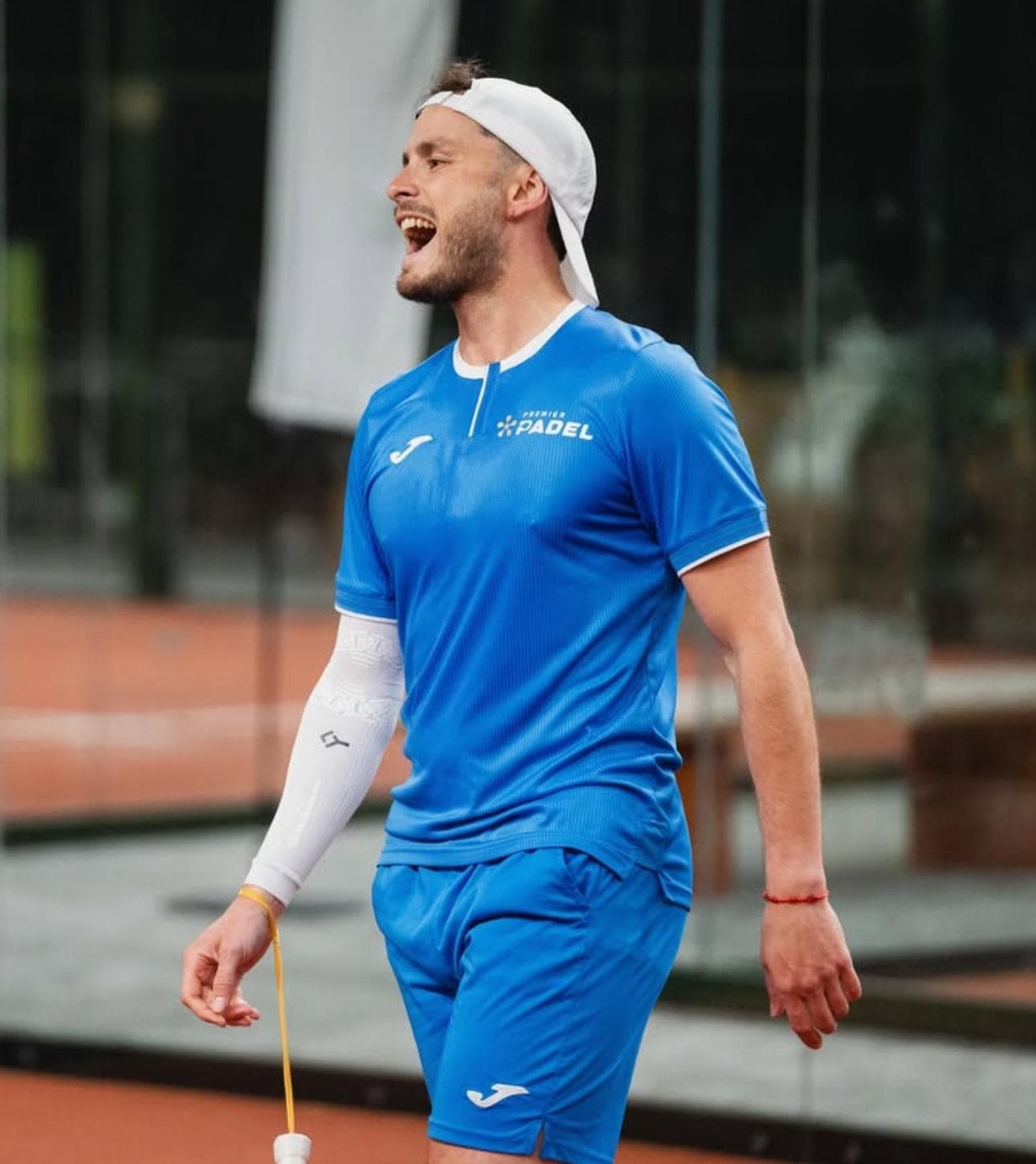
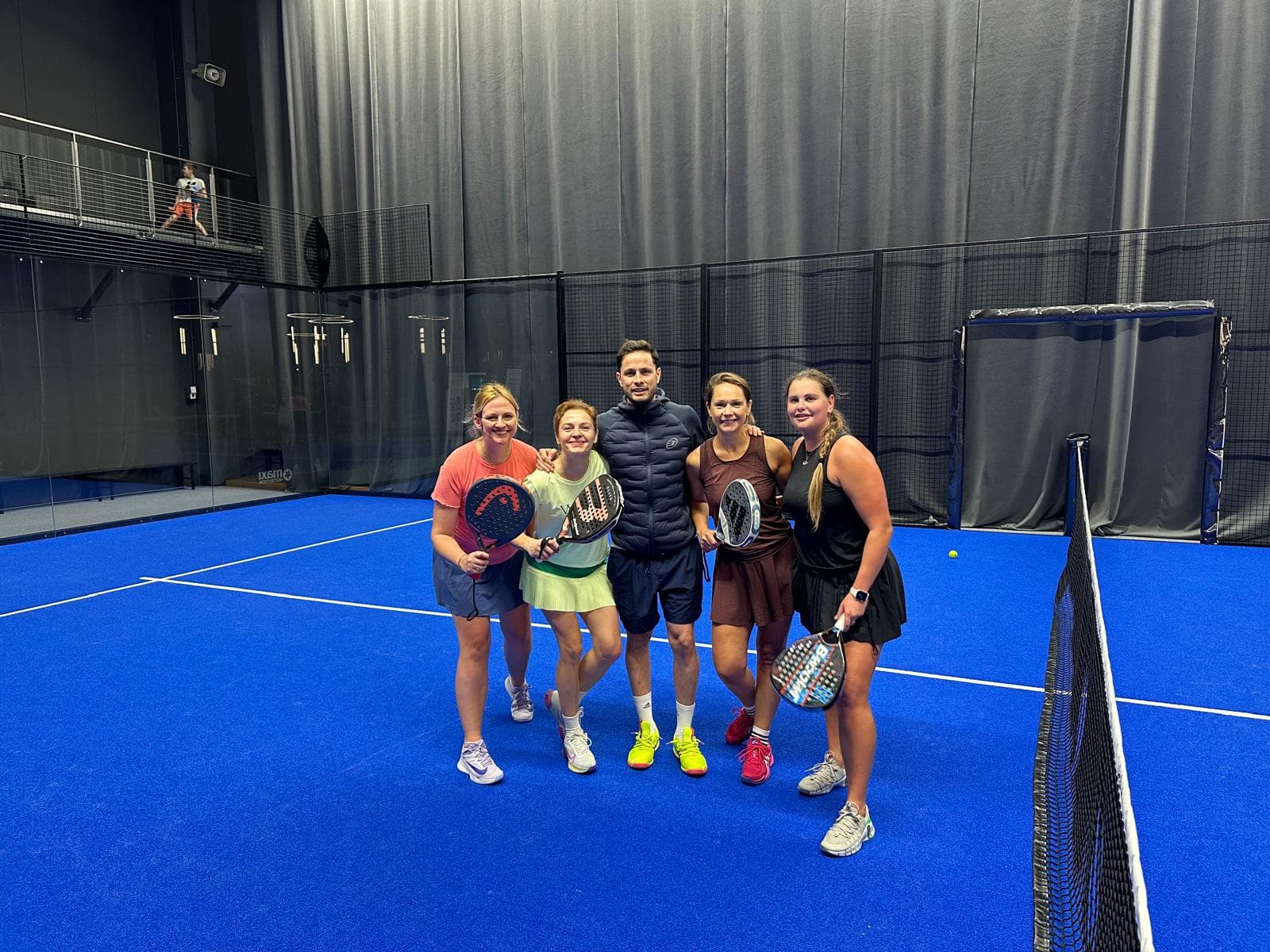
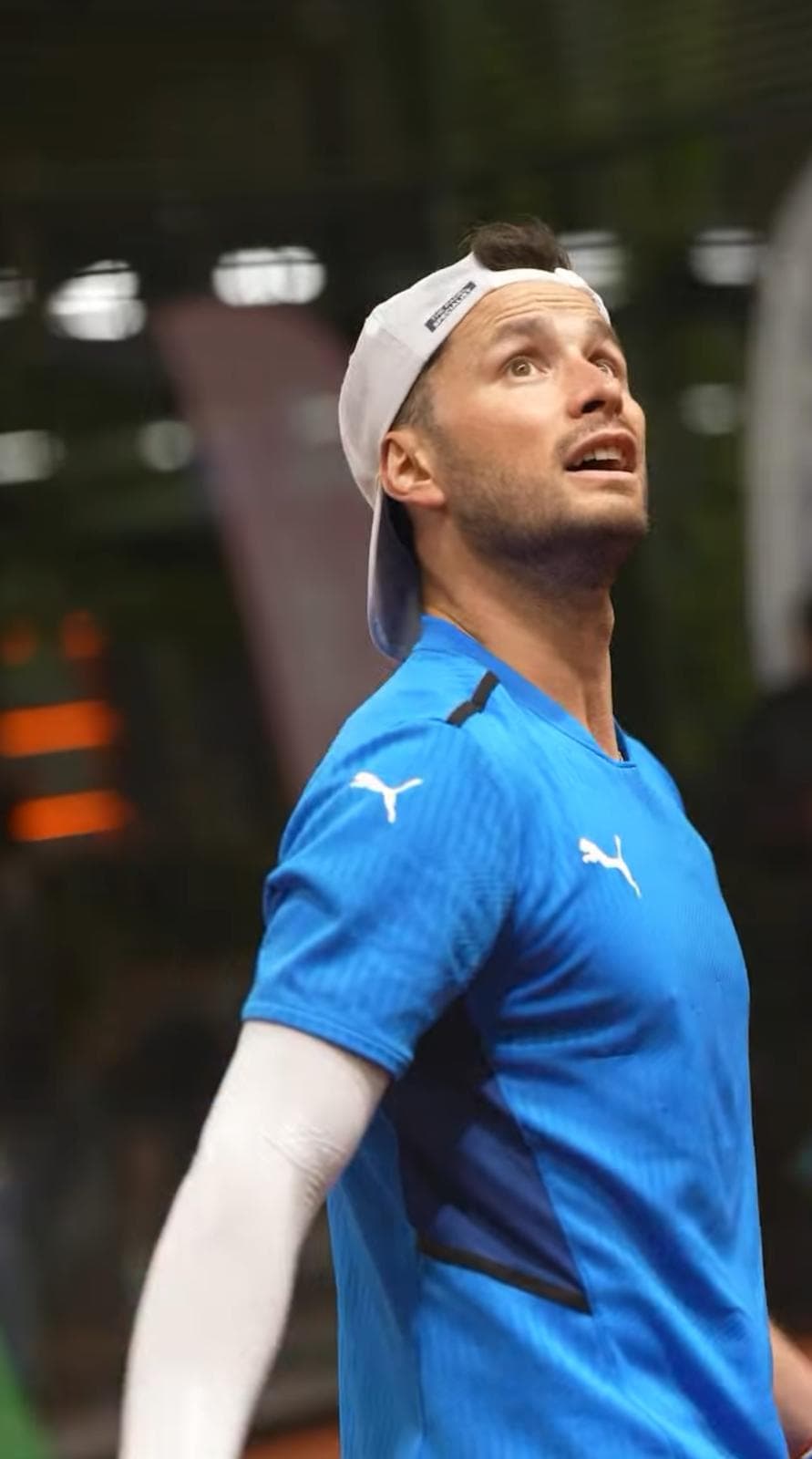
On court
Training
In Action.
Structure
What a Session
Looks Like.
A typical 60-minute session follows a predictable shape — because consistency is what makes progress trackable.
Warm-up
Dynamic mobility, gentle hitting, ramping up the heart rate. Bodies that are warm work better and break less often.
Technical block
One or two specific shots chosen from your training plan. Repetition, video feedback, small adjustments.
Tactical block
Live drilling against the coach or with a partner. Specific scenarios designed to surface the decisions you tend to get wrong.
Match play
Short, structured points where you apply the day's work under real pressure. This is where learning consolidates.
Debrief
A short conversation about what worked, what didn't, and what to focus on next session. Honest, kind, specific.
Long-term
The Long
Game.
Most amateur players train the same way every week, in random sessions, without a plan. Then they wonder why their game stops improving.
We borrow from elite sport: periodisation. Your year is broken into blocks, each with a focus. A foundation block builds physical robustness and technical cleanliness. A specific-preparation block sharpens tactics and competitive intensity. A competition block prepares you to peak for matches and tournaments. A transition block lets you recover, before the next cycle begins.
You don't have to be a professional to train like one. Periodisation simply means the work changes shape as the year progresses, so you keep adapting instead of stagnating. We build the plan with you, and we adjust it as your life and goals evolve.
Who We Coach
Every Level.
One Standard.
Beginners
Never picked up a paddle? We start at the very beginning. Grip, stance, the first clean hit off the back glass. We move fast but never faster than you can absorb. Within a few sessions you'll be playing real points.
Intermediates
You can hit the ball, win rallies against friends, but you've stopped improving. We rebuild the foundations where needed, plug the gaps, and put you back on a trajectory.
Advanced
Competitive players, tournament hopefuls, adults chasing mastery. We work on the fine points: shot selection under fatigue, mental routines, opponent profiling, fitness peaking.
Juniors
Young players get age-appropriate technique, an emphasis on movement quality, and an environment that builds confidence as well as skill.
Our Principles
What We
Stand For.
Specific work beats generic work. A drill chosen for your weakness is worth ten drills picked at random.
Process before outcome. Wins follow effort over time. Effort placed on the right things follows planning.
Honest feedback, kindly delivered. We will tell you the truth about your game — in a way you can actually use.
The body is the engine. No matter how clean your technique, an unprepared body limits your ceiling and shortens your career.
The mind is the steering wheel. Without it, every other pillar swerves off the road.
Consistency compounds. Show up. Train with intent. Repeat. The results take care of themselves.
“BOOK YOUR ASSESSMENTWe don't just teach padel. We teach the habits of a player who never stops improving.